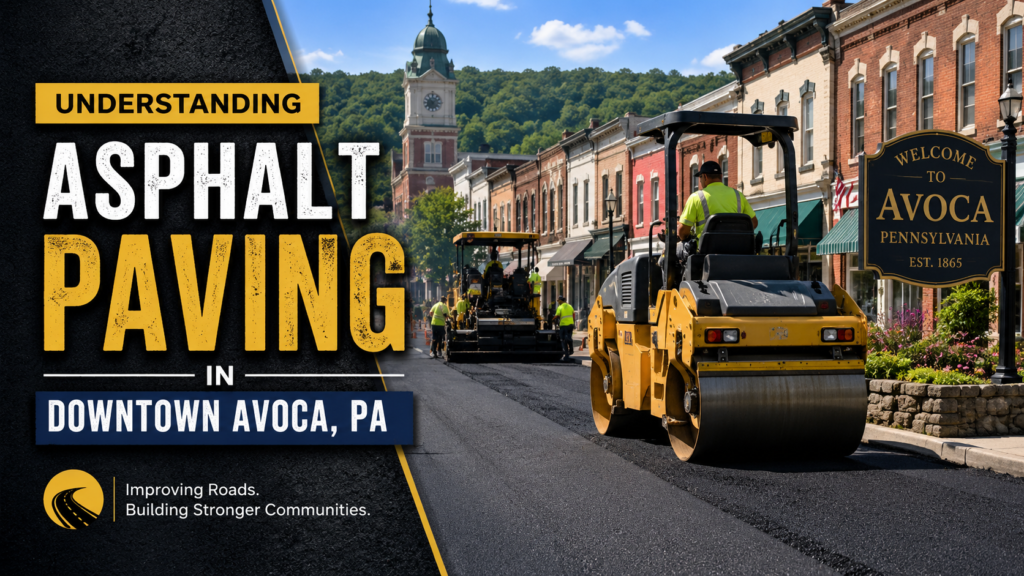
Downtown Avoca, Pennsylvania, carries with it the character of a classic Northeastern borough tree-lined streets, pre-war architecture, and a community built around generations of families. Originally settled as “Pleasant Valley” and officially incorporated in 1871, Avoca grew into a vibrant borough rooted in coal mining heritage and a tight-knit community culture. Today, the streets, driveways, and parking surfaces of Downtown Avoca tell a different kind of story one written in asphalt.
Asphalt is the backbone of modern road and pavement infrastructure. In walkable, dense neighborhoods like Downtown Avoca, the quality of pavement directly affects daily life from how smoothly residents drive to work, to how safely pedestrians navigate sidewalks and curb edges, to how well commercial properties present themselves to visitors. Understanding what Asphalt Contractor Downtown Avoca actually involves and why it matters is the first step to appreciating the work that goes into maintaining and improving surfaces in any downtown corridor.
What Is Asphalt and Why Is It So Widely Used?
Asphalt, also known as bituminous concrete, is a mixture of aggregates (stones, sand, and gravel) bound together by bitumen, a petroleum-based binder. When properly mixed and applied at the correct temperatures, this material produces a dense, durable, and weather-resistant surface that can handle significant traffic loads.
There are several types of asphalt mixtures used in paving projects, and the right choice depends on the specific application:
Hot Mix Asphalt (HMA): This is the most commonly used type for roads, driveways, and parking lots. It is produced at high temperatures (typically between 300°F and 350°F) and must be laid while still hot, which allows it to be compacted properly. HMA is highly durable and performs well under heavy vehicle loads.
Warm Mix Asphalt (WMA): Produced at slightly lower temperatures than HMA, warm mix asphalt is an increasingly popular choice because it reduces energy consumption during production and can be transported longer distances without losing workability.
Cold Mix Asphalt: Primarily used for patching and repairs rather than full installations, cold mix asphalt can be applied at ambient temperatures, making it useful for temporary fixes during colder months.
Porous Asphalt: Designed to allow water to drain through the surface and into a gravel bed below, porous asphalt is used in areas where stormwater management is a priority.
Each of these materials serves a distinct purpose, and experienced asphalt contractors in areas like Downtown Avoca assess site conditions, expected traffic volume, and climate patterns before selecting the appropriate mix for any given project.
The Asphalt Paving Process: From Ground Up
One of the most common questions people have about asphalt paving is what actually happens during the process. The work involved is far more involved than simply pouring material and spreading it around.
1. Site Evaluation and Planning
Before any material is laid, a qualified asphalt contractor begins with a thorough site evaluation. This includes assessing the condition of existing pavement (if any), identifying drainage patterns, examining the subbase, and determining the scope of work. In Downtown Avoca, where properties are situated in a compact urban grid, site planning also involves understanding proximity to curbs, utility lines, stormwater drains, and pedestrian zones.
2. Demolition and Removal
If old asphalt exists on the site, it must be removed before new paving can begin. This is done using milling machines or excavation equipment. In many cases, the removed asphalt is recycled a key environmental advantage of asphalt over other paving materials. Recycled asphalt pavement (RAP) is one of the most recycled materials in the United States, and incorporating it into new mixes reduces waste and material costs.
3. Grading and Subbase Preparation
Proper drainage is critical to the longevity of any asphalt surface. Water that pools beneath pavement accelerates deterioration, weakens the base, and eventually causes cracks and potholes. Contractors grade the surface to ensure water flows away from the pavement toward appropriate drainage points. A solid subbase typically composed of compacted gravel or crushed stone is then prepared and compacted to provide a stable foundation.
4. Binder Layer Installation
A binder layer of coarse aggregate mixed with oil is applied on top of the subbase. This heavy-duty layer is what gives asphalt its strength and load-bearing capacity.
5. Surface Asphalt Application
The surface, or top, layer of fresh asphalt is then applied. This is the smooth, black material you see and drive on. It contains finer aggregates and more bitumen, giving it a smooth texture and weather-resistant surface.
6. Compaction
After the asphalt is laid, heavy rollers compact the material, eliminating air pockets and creating a dense, unified surface. Proper compaction is one of the most important factors in asphalt performance inadequate compaction leads to premature cracking and pavement failure.
Common Asphalt Services in Downtown Areas
In a neighborhood like Downtown Avoca, where older homes and commercial buildings coexist alongside modern vehicles and heavy usage, several types of asphalt services are commonly needed:
Driveway Paving and Repaving: Many residential driveways in Avoca were installed decades ago and now show signs of significant wear cracking, heaving, crumbling edges, and surface oxidation. Full driveway replacement involves removing the old pavement, regrading the base, and installing new asphalt layers.
Parking Lot Construction and Resurfacing: Small commercial properties and multi-family residences in downtown zones often need functional, well-maintained parking areas. Parking lot paving must account for drainage, traffic flow, and ADA accessibility requirements.
Crack Sealing: Cracks in asphalt begin small but, if ignored, can expand dramatically. Water infiltrates through cracks, erodes the subbase, and causes potholes and structural failure. Crack sealing involves applying hot rubberized or polymer-modified sealants directly into the crack to create a waterproof barrier.
Pothole Repair: Potholes form when water weakens the base layer and vehicle traffic compresses the softened area. Patching potholes quickly is important not just for aesthetics but for safety both for vehicles and pedestrians.
Sealcoating: Sealcoating is a protective layer applied to the surface of existing asphalt. It shields the pavement from UV rays, water, oil, and other chemicals that degrade asphalt over time. A properly sealcoated surface looks fresh and extends pavement life significantly.
Line Striping: Once paving or resurfacing is complete, line striping ensures proper traffic flow and parking organization in commercial and multi-residential settings.
Why Asphalt Is Especially Suited to Pennsylvania’s Climate
Pennsylvania’s climate presents unique challenges for pavement. Avoca experiences cold winters with freezing temperatures, snowfall, and road salt application all of which can accelerate pavement degradation. Summers bring heat, UV radiation, and heavy rain events that test drainage and surface integrity.
Asphalt is particularly well-suited to these conditions for several reasons:
- Flexibility: Unlike concrete, asphalt has a degree of flexibility that allows it to expand and contract with temperature changes without cracking as readily.
- Quick Installation: Asphalt cures faster than concrete, meaning roads and driveways can be returned to use within a day or two of installation.
- Repairability: Damaged sections of asphalt can be removed and replaced without tearing up entire surfaces, making repairs practical and cost-efficient.
- Recyclability: Asphalt is 100% recyclable, and old pavement material can be reclaimed and incorporated into new paving projects.
- Traction: Fresh asphalt provides good traction for vehicles, and rubberized additives can enhance this quality further.
Maintenance is especially important in Pennsylvania because freeze-thaw cycles cause pavement to contract and expand repeatedly. Each freeze-thaw cycle opens existing cracks slightly wider and introduces more moisture beneath the surface. Proactive crack sealing and sealcoating before winter months is one of the most effective ways to extend pavement life in this region.
Asphalt and Community Infrastructure
The condition of roads, driveways, and parking surfaces is about more than convenience. In a historic downtown area like Downtown Avoca, pavement quality has a direct impact on:
Property Values: Well-maintained driveways and parking surfaces significantly improve curb appeal and can positively influence real estate assessments.
Business Activity: Commercial properties with smooth, clearly marked, and well-lit parking areas attract more customers and project professionalism.
Safety: Cracked sidewalks, potholed driveways, and deteriorating road surfaces create genuine hazards for drivers, cyclists, and pedestrians alike. Timely asphalt repairs mitigate liability risks for property owners.
Community Pride: The overall aesthetic quality of a neighborhood’s infrastructure reflects the pride its residents and business owners take in maintaining their surroundings.
Recognizing When Asphalt Needs Attention
Property owners often wonder how to tell when their driveway or parking area needs professional attention. Here are the most common indicators:
- Surface Cracking: A network of small cracks across the surface (called alligator cracking) indicates base failure and should be addressed promptly.
- Fading and Oxidation: When asphalt turns gray rather than remaining deep black, it has lost its binding oils to UV exposure and is becoming brittle.
- Raveling: Loose gravel or aggregate appearing on the surface indicates the binder is breaking down.
- Pooling Water: If water stands on the pavement rather than draining away, grading may be off or the surface has developed depressions.
- Potholes: These require immediate attention to prevent further structural damage.
- Edge Cracking: Cracks along the edges of a driveway or lot often indicate a lack of lateral support or base erosion.
Understanding these warning signs allows property owners in Downtown Avoca to seek professional assessment before minor issues escalate into full replacements.
The Importance of Local Expertise
Asphalt paving in any location benefits from contractors who understand local soil conditions, climate patterns, and community infrastructure needs. Downtown Avoca has its own character the type of soils beneath its roads, the way stormwater flows through the borough’s drainage systems, the particular traffic patterns created by its streets and alleyways and all of these factors influence how paving projects should be planned and executed.
Working with a contractor familiar with Luzerne County’s conditions means the project will be planned with those realities in mind, using appropriate materials and methods that account for regional climate and soil behavior.
Conclusion
Asphalt paving is a science as much as it is a craft. From the selection of the right asphalt mix to the proper preparation of the subbase, from timely crack sealing to proactive sealcoating, every step in the process contributes to the long-term performance and appearance of a paved surface. In Downtown Avoca a neighborhood with deep historical roots and an active community quality pavement infrastructure supports safe travel, enhances property values, and contributes to the overall vitality of the area.
Whether it’s a residential driveway, a commercial parking lot, or a municipal roadway, the asphalt beneath our feet plays a far more important role than most people realize. Understanding that role is the first step toward making informed decisions about maintaining and improving the paved spaces we rely on every day.