Queue Management System in Saudi Arabia: A 2026 Field Guide
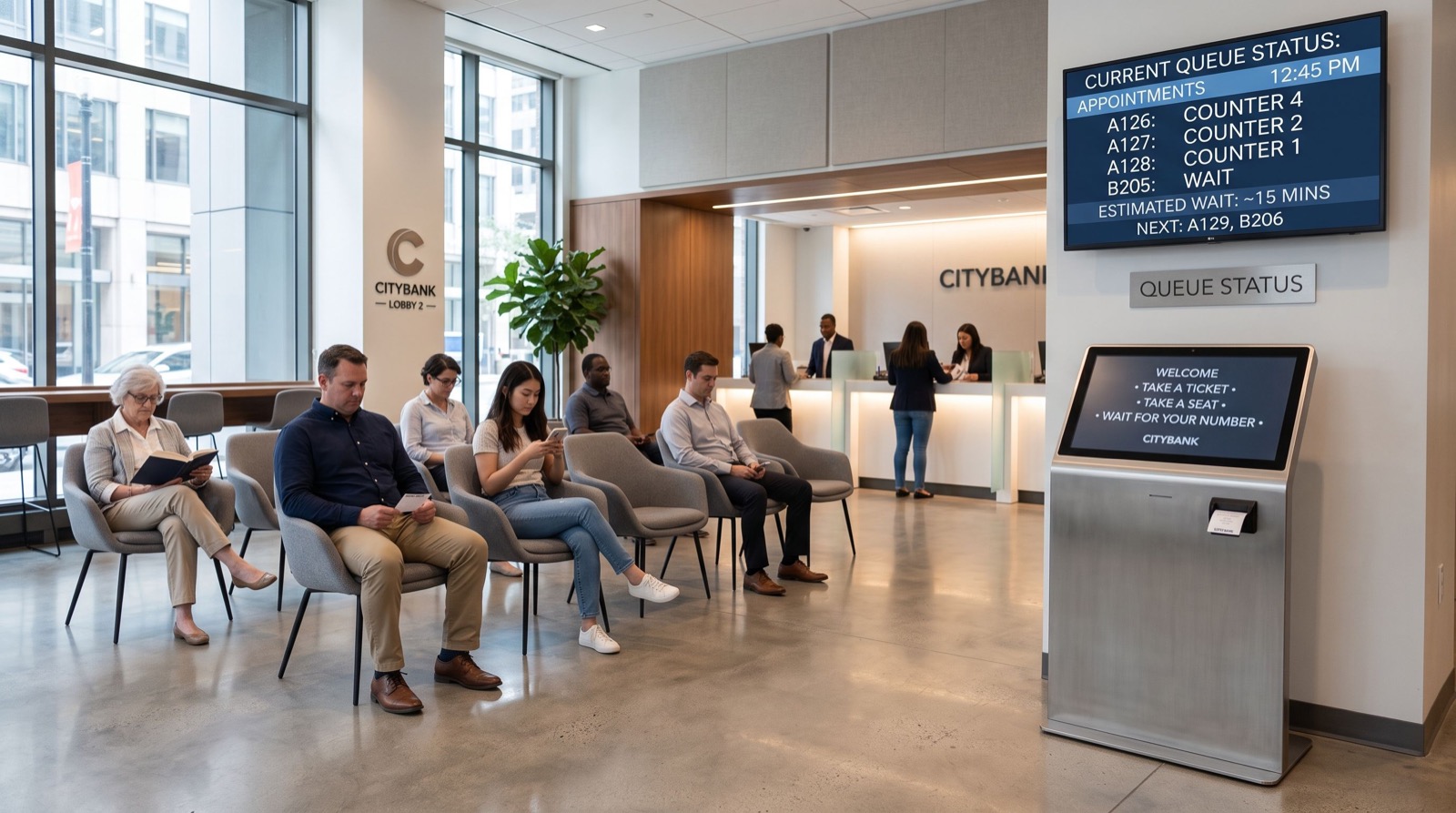
Walk into a busy clinic in Riyadh or a government service centre in Jeddah on a Sunday morning and you will understand the problem instantly: crowded waiting halls, confused visitors, and staff fielding the same “how long will this take?” question all day. A modern queue management system in saudi arabia solves that chaos by turning a messy crowd into an orderly, measurable flow. In 2026 these systems are no longer a luxury for premium banks; they are a baseline expectation across healthcare, telecom, retail, and public services.
This guide draws on hands-on deployment experience across the Kingdom and explains what the technology actually does, how to choose it, and where it pays for itself fastest.
Why queue management matters in the Kingdom right now
Saudi Arabia’s service economy is expanding quickly under the national transformation agenda. More residents, more visitors, and higher service expectations mean that the old paper-ticket dispenser simply cannot keep up. The priorities set out in the government’s Vision 2030 programme explicitly push for faster, digital-first citizen services, and waiting-time reduction is one of the most visible ways an organisation shows it is modernising.
From a practical standpoint, a well-run queue does three things. It shortens the perceived wait, it collects data that managers never had before, and it frees front-line staff to serve instead of police the line.
What a queue management system actually includes
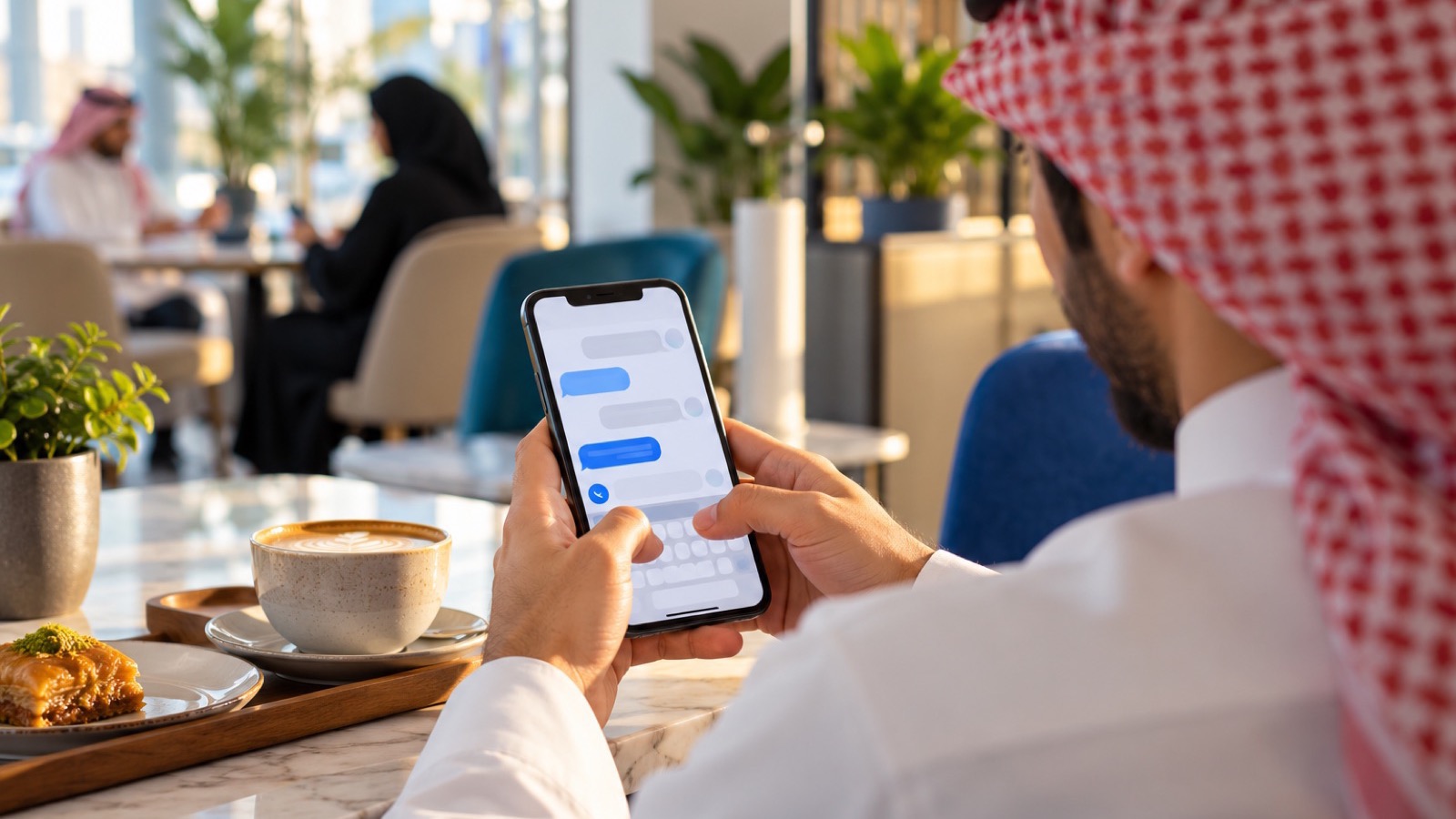
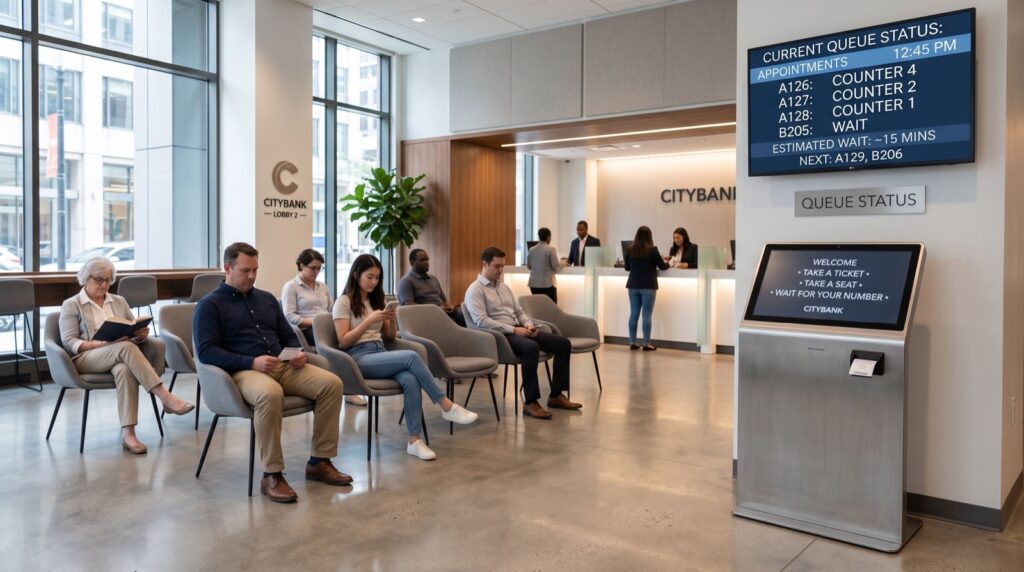
- Ticketing kiosk or mobile check-in — visitors select a service and receive a number by printout, SMS, or QR code.
- Digital signage — large displays and audio call the next ticket in Arabic and English.
- Counter software — agents call, transfer, and recall customers from a simple dashboard.
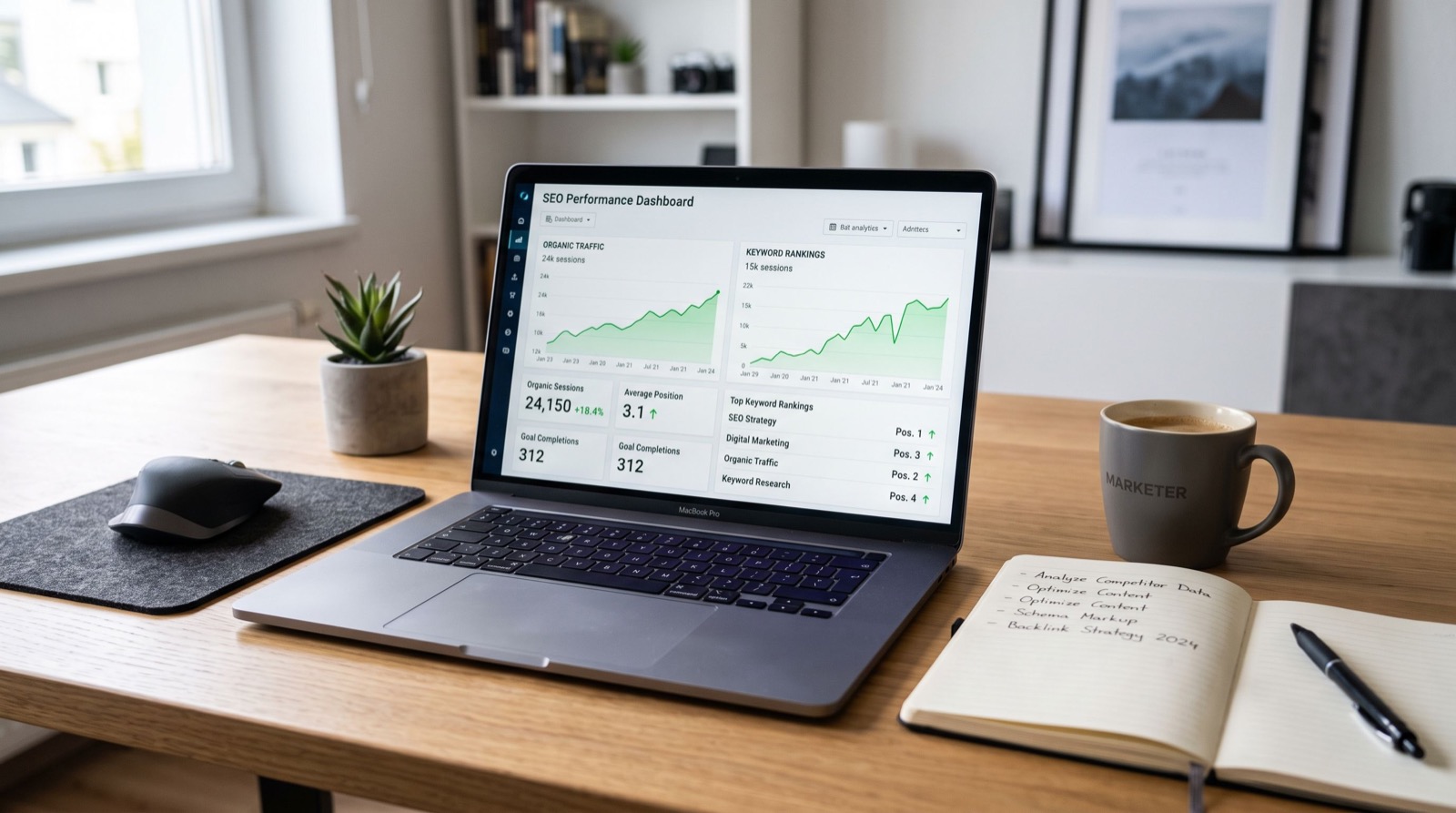
- Analytics dashboard — live and historical data on wait time, service time, and peak hours.
- Feedback capture — a quick rating prompt after service to track satisfaction.
Virtual queuing vs. the drive-thru lane
Branch queuing is only half the story. For fuel stations, pharmacies, and fast-food operators, the line forms in cars rather than in a hall. Purpose-built Drive Thru Systems apply the same logic outdoors: order points, loop detectors, and timing boards that measure how long each vehicle spends from menu board to collection window. Pairing a branch queue platform with a drive-thru timing solution gives a single operations team one view of every customer touchpoint.
| Feature | In-branch virtual queue | Drive-thru system |
|---|---|---|
| Primary metric | Wait time per counter | Service time per vehicle |
| Check-in method | Kiosk / mobile QR | Order point / sensor loop |
| Best fit | Banks, clinics, telecom | QSR, pharmacies, fuel |
| Typical KPI target 2026 | Under 8 min wait | Under 4 min per car |
| Peak-hour benefit | Staff rebalancing | Lane throughput |
How do you choose the right queue system for a Saudi branch?
Procurement in the Kingdom has its own rules of thumb. Arabic-first interfaces are not optional, and integration with existing appointment portals or national ID verification can make or break a rollout. Before you sign anything, work through this order of operations:
- Map the journey. Document every service a visitor can request and how long each realistically takes.
- Size the peaks, not the average. Design for your busiest hour, because that is when complaints are born.
- Confirm bilingual support. Every screen, ticket, and SMS must render cleanly in Arabic and English.
- Check the integrations. Appointment booking, CRM, and SMS gateways should connect without custom glue code.
- Pilot one branch. Prove the numbers in a single location before a kingdom-wide roll-out.
When you need on-site configuration, signage mounting, and staff training handled properly, lean on dependable specialists who understand local hardware supply and after-sales support.
A practical tip from the field
One original lesson we learned the hard way: do not hide the estimated wait time. Counter-intuitively, showing an honest “about 12 minutes” on the ticket reduces complaints far more than a shorter but invisible wait. Transparency converts frustration into patience, because the visitor feels in control of their own time.
The measurable return on investment
The business case writes itself once the data starts flowing. In deployments we have supported, managers typically see no-show rates drop, abandonment (people walking out before being served) fall sharply, and staff utilisation become visible for the first time. Here is where the value concentrates:
- Reduced walkaways during peak hours, protecting revenue.
- Evidence-based staffing, so counters open only when demand justifies them.
- Higher satisfaction scores feeding into service-quality reporting.
- Cleaner compliance records for regulated sectors such as banking and health.
Because the analytics are continuous, you can test a change on Monday and read the result by Friday — a feedback loop that paper tickets never offered.
Which sectors see results fastest?
Not every branch gains at the same pace. In our experience, three sectors in the Kingdom feel the impact within the first month of go-live, because their pain points are so visible to the public.
- Healthcare — outpatient clinics and diagnostic centres where anxious patients wait for consultations and results. Clear calling and realistic estimates calm the entire hall.
- Banking and finance — branches juggling quick cash services and long account-opening sessions benefit enormously from splitting fast and slow lines.
- Telecom and government counters — high-volume, document-heavy services where fairness and visible order matter most to walk-in visitors.
Retail and automotive service centres follow close behind, especially once the drive-thru timing data starts guiding staffing at the busiest hours.
Rollout mistakes to avoid
Even strong technology underperforms when the launch is rushed. Three avoidable errors account for most disappointing deployments. First, buying hardware while ignoring the analytics module means you collect data but never act on it. Second, designing for the average day rather than the peak hour leaves you overwhelmed exactly when it counts. Third, skipping proper staff training pushes agents back to informal crowd control within a week.
Treat the launch as a change-management project, not a hardware install. A short training session, a clear owner for the weekly data review, and an honest wait-time display together do more for success than any single premium feature. Culture, not kit, decides whether the investment delivers.
Frequently Asked Questions
Is a queue management system in Saudi Arabia expensive to run?
Ongoing costs are modest compared to the staffing waste it removes. Most of the budget is upfront hardware and installation; monthly software and SMS costs are predictable, and the labour savings usually cover them within the first year.
Can it work in Arabic and English at the same time?
Yes. Any system worth buying in 2026 ships with full bilingual ticketing, signage, and voice calling. Arabic should be the default, with English as a toggle for visitors and expatriate staff.
Do I need internet for the system to keep working?
Core calling and ticketing run on the local network, so a brief internet outage will not stop service. Cloud analytics and SMS simply resync once connectivity returns.
How is a drive-thru system different from a branch queue?
A branch queue manages people walking up to counters, while a drive-thru system times vehicles moving through order and collection points. Many operators run both and view the results on one dashboard.
Conclusion
A thoughtfully chosen queue management system in Saudi Arabia is one of the rare upgrades that improves the customer experience and the operations ledger at the same time. Start with a single-branch pilot, insist on honest wait-time displays and Arabic-first design, and let the analytics guide every staffing decision from there. Ready to cut your waiting halls down to size in 2026? Map your busiest hour this week and build your rollout plan around it.